Fifty Words That Had to Sell a Whole Novel: My Blurb, Rewritten Twelve Times
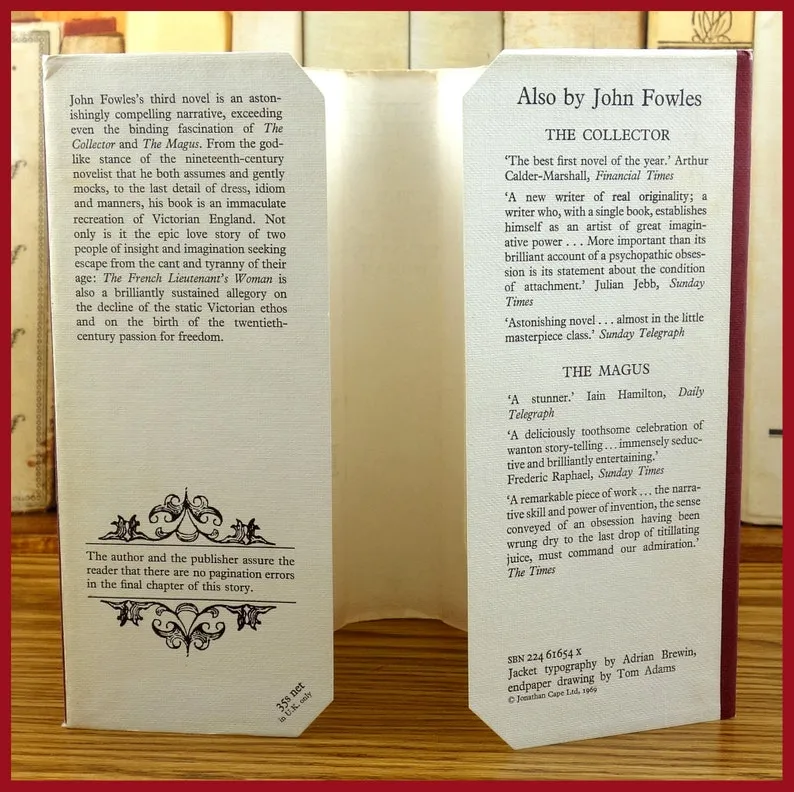
Photo: paperback book back cover blurb close up hands, via i.etsystatic.com
Nobody warns you about the blurb. You spend three years on the novel, you fight through edits, you argue about the cover, and then some pleasant person at the small press turns to you and says: "Right, we'll need back cover copy by Friday. About fifty words. Oh, and you're the best person to write it."
Fifty words. To sell 94,000.
I've now been through twelve print runs of my first novel — small press, modest ambitions, reprints whenever a stock order or a festival appearance nudged the thing back into production — and each one has come with a fresh pass at the blurb. Lined up side by side, those twelve versions read like a diary of my own insecurities. Here's what they taught me.
Version One: The Synopsis Nobody Asked For
The original blurb was, in fairness, a plot summary. A competent one. It introduced the protagonist by full name, established the setting (a fading seaside town in Yorkshire, since you ask), and walked through the first act in careful order, trailing off just before anything interesting happened.
It read like homework because I wrote it like homework. I'd spent so long inside the story that I genuinely believed the plot was the selling point. It isn't. Nobody picks up a book in Waterstones because the logistics sound thorough.
My editor's note on that first draft has stayed with me: "This tells me what happens. Tell me why I should care."
The Middle Years: Throwing Everything at the Back Cover
Reprints two through five got progressively more desperate. I crammed in comparisons — "for readers of" three different authors, one of whom I'd never actually read. I added an endorsement from a writer I'd met once at a festival in Cheltenham. I used the word "unforgettable," which I stand by as the single most embarrassing word I've ever put in print.
The problem with the kitchen-sink blurb is that it signals doubt. Readers can smell it. A blurb that lists five selling points is a blurb that trusts none of them.
What Actually Changed
Around reprint six, something clicked, and it clicked because of a bookseller in Sheffield who told me, kindly, that my back cover "did a lot of talking and not much promising." So I started cutting.
The comparisons went first. Then the endorsements migrated to a quote line at the top, doing their own job. Then the plot summary shrank from four sentences to one — and honestly, one was enough. What replaced it was tone. A sense of voice. The blurb stopped describing the book and started sounding like it.
By reprint nine, the thing read:
Maggie has one summer to save her mother's chip shop, her friendship with a woman she hasn't spoken to in a decade, and — though she'd never admit it — herself. A funny, aching story about the towns we escape and the ones that won't let us go.
Two sentences. Fifty-odd words with the name and the quote line. Sales per copy in shops that stocked it face-out went up, not down, when we stripped it back. That's the bit that surprised me: less information didn't cost me readers. It found them.
A Defence of the Humble Blurb
Here's my case, and I'll make it loudly: the back-cover blurb is the highest-stakes prose a writer ever writes.
Think about it. Your novel gets a reader's attention for as long as they're willing to give it — minutes, hours, weeks if they're enjoying themselves. Your blurb gets roughly eight seconds, in a shop, from someone holding a flat white in one hand and your book in the other. Every word is load-bearing. There is no second chance, no "it gets going after chapter two." The blurb is the whole pitch, compressed to the size of a postcard.
And yet we spend weeks on synopses for agents and hours on cover-copy briefs for other people, and almost no time on the fifty words that actually sit between a browsing reader and the till.
What I'd Tell Myself at Reprint One
Three things, mostly.
Write it last, and write it in voice. You can't blurb a book you're still inside. And if the blurb doesn't sound like the book, readers feel cheated before page one.
Promise, don't summarise. One sentence of plot, maximum. The rest is atmosphere and stakes. What does the reader feel if they pick it up?
Cut the comparisons. "For readers of X meets Y" is a crutch, and every bookseller I've ever spoken to quietly hates it. Let your book be the only one of its kind on the shelf, even for fifty words.
Twelve reprints in, I've made my peace with the form. The blurb is not a synopsis. It's a handshake — brief, warm, and over before anyone's decided whether they like you. Get it wrong and nobody remembers you. Get it right, and they carry the book to the till without knowing why.
Fifty words. Best I can tell you is: spend them like they're the only ones you've got. Because on the back of a book, they are.