Books I'll Never Read Again: A Shelf-by-Shelf Confession
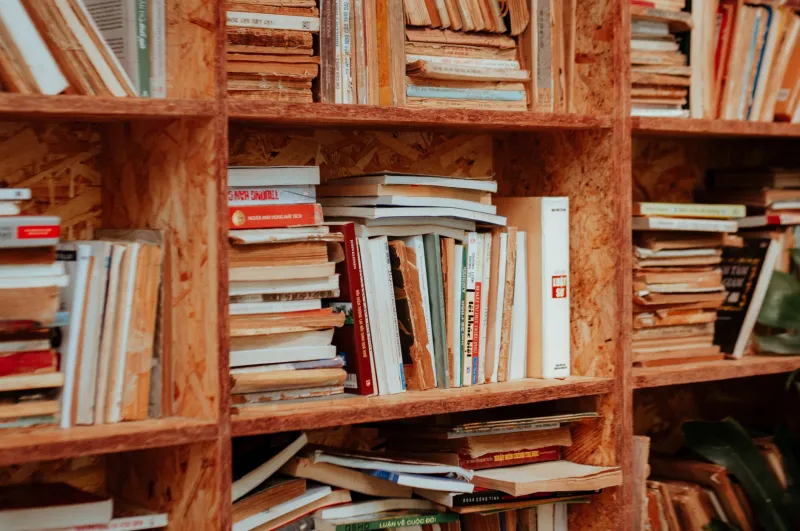
There's a shelf in my flat that I think of as the quarantine shelf. Not because of any pandemic — it's a pun, of sorts, on quarantining: the books I've isolated from the rest of the collection, kept but never touched, too heavy with history to donate and too embarrassing to display at eye level.
Everyone has one. Yours might be a box in the loft or a drawer at your parents' house in Swindon. Mine is a wobbly IKEA Billy bookcase in the spare room, and last Sunday, with the rain doing its usual British percussion against the window, I finally gave it a proper audit.
The January That Never Happened
Top shelf, spine cracked but pages pristine: Atomic Habits, a running memoir, and a 1,200-page tome about the Roman Empire that I bought on the second of January one year, in a fit of self-improvement that lasted approximately eleven days.
The bookmark in the habits book is at page 34. The running memoir has never been opened — I know this because there's still a receipt inside it from a Waterstones in Leeds, dated the same week I apparently decided I was going to become a different person.
We don't buy these books to read them. We buy them to purchase a version of ourselves. The shelf keeps the receipt long after the transformation fails.
The Ex, Who At Least Had Taste
Middle shelf: three books I cannot get rid of and cannot look at without wincing. A gorgeous hardback of Stoner, a well-loved copy of The Remains of the Day, and a slim poetry collection with a birthday card still tucked inside the dust jacket.
All gifts. All from the same person, roughly four years ago.
Here's the awkward truth: she had better taste in books than I did, and she knew me well enough to pick things I'd actually love. I did love them. That's the problem. Rereading them now would feel like reading her marginalia on my own life.
And yet — off they go, to the charity shop or the bin? Not a chance. They sit there like photographs you keep in a drawer rather than on the mantelpiece. I've made peace with that. Some books are kept for who you were when you read them, not for the reading.
The Great Unfinished Era
The bottom shelf is the most damning. This is where ambition went to die, roughly 2018 to 2021: Ulysses (page 41), Infinite Jest (page 88, two bookmarks, one a train ticket from Manchester Piccadilly), a doorstop of a Proust volume, and — I'm not proud — a Spanish textbook from when I was definitely going to move to Valencia.
This shelf represents the era when I thought being a Serious Reader meant hoarding Serious Books. I treated reading like a syllabus, a self-directed degree I was permanently failing. Every one of those spines is a small monument to the gap between who I thought a writer should be and who I actually am: someone who rereads Wodehouse and devours cheap paperbacks from the charity shop on the corner.
The funny thing? Once I accepted that, I read more than I ever had. The quarantine shelf isn't shameful. It's just honest.
Your Turn
So here's my invitation. Sometime this week, when the telly's dull and the washing-up's done, go and look at the books you keep but never touch. Don't clear them out — that's a different article, probably written by someone more disciplined than me. Just read the shelf like a diary.
What does the pristine copy say about the January you? What does the cracked spine you can't bin say about who you loved? What does the whole blooming collection say about the person you've become, standing there in your socks, judging your past selves gently?
Mine says: hopeful, occasionally pretentious, lucky in exes' book taste, and finally — finally — comfortable reading what I actually like.
I'll take that autobiography over most of the ones on my shelf.