Everyone in Town Knew Me Before They'd Read a Word: Notes on Being the Local Author Nobody Stocked
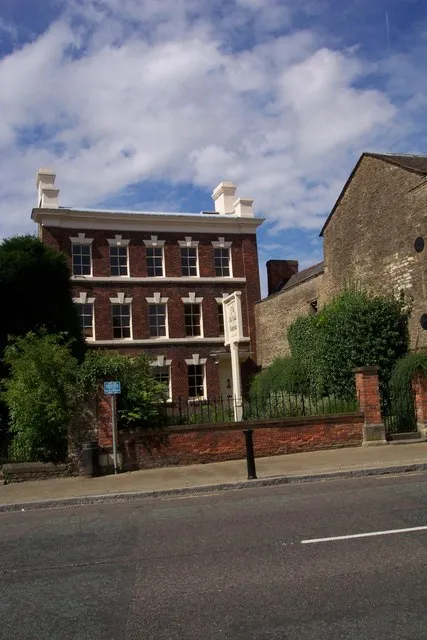
Photo: Tom Dixon, CC BY-SA 2.0, via Wikimedia Commons
There's a particular flavour of dread that comes with publishing a book set in your own town, and it isn't the dread of criticism. It's the dread of the checkout.
My novel was set in a fictionalised version of the market town I'd lived in for fifteen years — the same one where I queue at the bakery on Saturdays and where my neighbour's cat has a better social life than I do. When the book came out, everyone knew. Not because of any press, but because small towns run on an information network faster than anything BT could build. The woman who cuts my hair knew before my own mum had finished the proofs.
The Bookshop Problem
And yet the town's one remaining independent bookshop didn't stock it. I want to be clear: they had every right not to. It was a small press run, the margins were thin, and I was — as far as the shop was concerned — just a bloke who came in to browse the football biographies. But I'll admit the omission stung. Every Saturday I'd walk past the window display and see my novel's absence sitting there like an unspoken thing between us.
For months I did nothing, which is the traditional British response to most problems. I told myself it would be vain to ask. Who was I to march into a shop and demand shelf space? I'd read enough about 'the local author phenomenon' to know how it can land — the delicate eye-roll, the sense that you're trading on proximity rather than merit. In a place where everyone knew me as the bloke from the allotments, asking to be taken seriously as a writer felt like breaking character.
The Conversation I'd Been Avoiding
Eventually, a friend forced the issue. 'Just ask them,' she said, in the tone of someone who does not have to do the asking. So on a wet Tuesday in February, I stood at the till of the bookshop, clutching my own paperback like a nervous teenager returning a library book, and asked the owner — a woman named Deb who has sold books in that town for longer than I've lived in it — whether she'd consider stocking it.
What happened next rearranged my understanding of the whole thing.
Deb looked at me, then at the book, and said: 'I didn't know you'd written one.'
That was it. That was the entire barrier. Not politics, not vanity, not a judgment on my prose — she simply hadn't known. I'd spent six months constructing an elaborate narrative about small-town hierarchy and the ethics of self-promotion, and the actual answer was that nobody had told her. In my effort to seem modest, I'd made myself invisible.
What She Said Next
She read the first chapter that night, she told me later, standing in the shop with her coat half on. The following week, three copies appeared on the shelf, spine-out, above the till. Not the window — she was honest about that, space was tight — but a good shelf, at eye level, in the local interest section, which apparently is where I'd been all along without knowing it.
Then came the part I hadn't anticipated. People came in and bought it because it was local. A retired teacher recognised a street name. Someone's grandson bought a copy before emigrating to Perth. Deb started hand-selling it with the ferocity of a woman defending a personal friend, which, by then, I suppose I was.
The Lesson About Hometowns
I'd thought the awkwardness of writing about my town came from the town — from the fear that people would see themselves in the pages and take offence. But the real awkwardness was mine. I'd treated 'local author' as a diminishing term, a pigeonhole, when for the readers around me it was the opposite: it was the whole point. People don't want to read about anywhere. They want to read about here.
These days I sign copies in that shop a couple of times a year, on a small table near the poetry section, and Deb tells me which customers were 'loyal' about it and which ones she had to argue with. It's the best retail relationship I have and probably the most honest one.
If you're a writer in a small town, wondering whether to ask your local bookshop to stock you: ask. The worst that happens is a no. The best that happens is you learn that the pigeonhole was never locked — you just hadn't tried the door.