One Word in Chapter Nine Nearly Ended My Book Club Career
Photo: Internet Archive Book Images, No restrictions, via Wikimedia Commons
The Moment It Happened
I'd been looking forward to it for weeks. My novel — my actual novel, the one I'd spent three years writing in a shed that leaked — had been chosen by the village book club. Twelve copies ordered through the library, a bottle of Pinot Grigio on the sideboard, and me, the only author to have lived in this parish since the bloke who wrote the local history pamphlet in 1987.
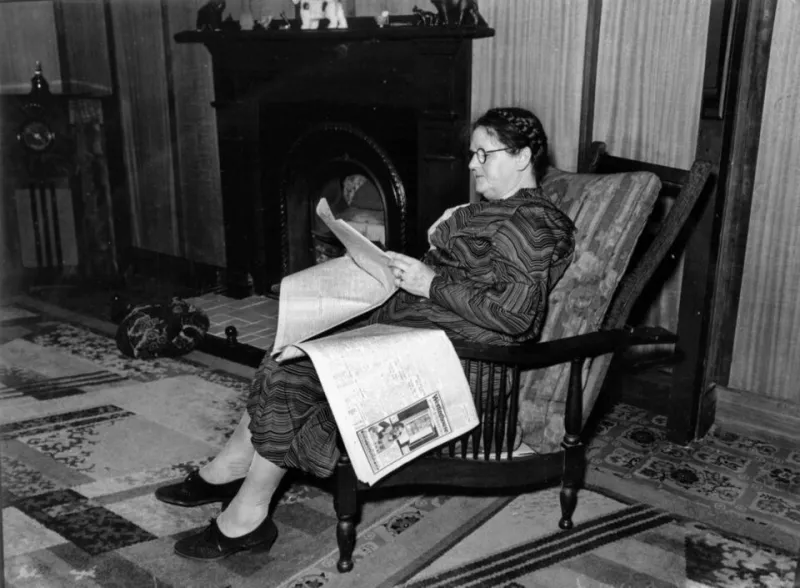
I should have known it was going sideways when Janet turned to page 114, adjusted her reading glasses, and said, with the flat calm of a woman announcing a death: "Well. There's a word in chapter nine."
The word was "bollocks".
It appears once. In context, it's practically a documentary. A character drops a spanner on his foot in a garage in Doncaster and says it. One word. Fourteen letters if you count the wrong way. And for the next forty minutes, my village book club conducted the most rigorous literary debate I've witnessed outside of an MA seminar.
The Case for the Defence
To be fair, not everyone was against it. Brian — retired postman, reads mostly Lee Child — argued that people swear, so characters should swear, and that was that. "I said worse than that every Tuesday for thirty years," he said. "Usually about the round sizes."
But the majority view, expressed with great politeness and considerable force, was that the book had been "going so nicely" until that point. That readers had formed a relationship with the story. And that the word had, in Janet's phrase, "broken the contract".
I asked what contract. Nobody could quite say. But everyone knew it had been broken.
Respectability Is a British Art Form
Here's what I've come to understand since: the objection was never really about the word. It was about what the word signalled. My book club had read the novel as a certain kind of book — gentle, redemptive, the sort of thing you'd recommend to your sister-in-law — and the expletive reclassified it. Suddenly it was a book that said that sort of thing. And you can't recommend a book that says that sort of thing to your sister-in-law.
Class runs through all of this like a wire. Nobody in that room would have blinked at "damn". Nobody would have noticed "bloody". But "bollocks" belongs, in the British imagination, to a particular register — garages, football terraces, my uncle Ken. Its appearance in a book club novel was a category error, like finding a paving slab in a trifle.
And I say this with affection: that room was doing exactly what British readers are trained to do. We police tone. We have an entire national apparatus for it — book clubs, reviews that begin "I couldn't relate to the characters", the phrase "not for me" deployed like a diplomatic sanction.
What I Changed (Nothing) (Almost)
The obvious question: did I cave? Did I go home and delete the word?
I did not delete the word. The spanner lands, the character swears, and I'd argue it's the most honest sentence in the book. A character who drops a spanner on his foot and says "oh dear" is a character written for the comfort of the reader, not the truth of the scene.
But I didn't walk away entirely unchanged. What I did do — and this is the bit worth taking away — was look at every other moment in the book where I'd softened language or behaviour to keep things "nice", and ask whether softness was a choice or a flinch. Mostly it was a flinch. Chapter nine had simply been the one place I'd stopped flinching, and the book club noticed immediately. Readers always notice the inconsistency, never the offence.
The Truce
We ended, as all good British disputes do, with tea and a compromise nobody fully believes in. Janet announced that she'd "get used to it" by the second read. Brian suggested I write a sequel with "a bit more of that in". And the chair, a formidable woman named Pat who'd said nothing throughout, closed the meeting by saying the book was "very good, considering" — which, from Pat, is a Booker shortlisting.
I'm invited back next year. I've been asked, specifically, to talk about "the research process". I suspect chapter nine will come up.
If you're a writer facing your own Janet: listen carefully to the objection, because there's usually something real underneath it — a reader telling you where your book signalled one thing and delivered another. But don't confuse uncomfortable with wrong. Some words are doing work that niceness can't do.
The spanner drops. The word lands. Keep it in.