Saying No on a Tuesday: The Contract I Refused and the Small Press I Chose Instead
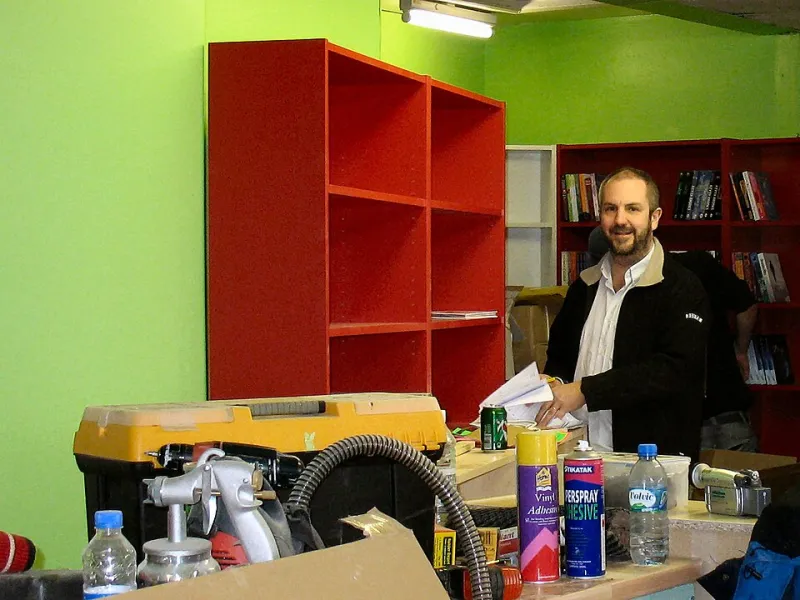
Photo: Alan Stanton, CC BY-SA 2.0, via Wikimedia Commons
The email arrived on a grey Tuesday in February, subject line reading 'Offer — [Title], First Rights'. I read it standing up in my kitchen, the way you'd take bad news, except it wasn't bad news. It was an actual publishing contract. £3,500 advance, standard royalty terms, eighteen months to publication. I sat down on the bin lid, which is not designed for sitting, and rang my partner at work to say the word 'publisher' about eleven times.
And then, two weeks later, I said no. Let me explain, because my mother still hasn't forgiven me.
The Arithmetic Nobody Shows You
£3,500 sounds like a lot until you spread it across three years of work. That's roughly the price of a second-hand Vauxhall Corsa, or about 87p an hour for the privilege of someone else owning your paperback design. And the advance wasn't actually an advance on anything meaningful — with standard 7.5% royalties on a £9.99 paperback, I'd earn back that £3,500 only after selling around 4,700 copies. Books by unknown writers rarely do that.
I'm not saying this to sound canny. I said yes in my head immediately. It took a friend of mine — a proper numbers person, the sort who has an ISA with a name — to sit me down and ask what I was actually buying. The answer, she pointed out, was a stamp of legitimacy and eighteen months of waiting.
The Handshake in Sheffield
Meanwhile, a small independent press had come sniffing around the same manuscript. Five employees, a shared office above a bakery, a track record of maybe a dozen titles. Their offer: no advance to speak of — £750 — but 25% net royalties on print, 50% on ebooks, and a contractual right to approve the cover. When I asked what happened if we disagreed, the editor said, 'We'd argue about it over a pint and one of us would be right.'
I asked a solicitor to look it over anyway, because romance is for the blurb, not the small print. She said the contract was unusually clean. Rights revert after three years if sales dip below a threshold. I keep my audiobook rights. I keep my film rights, which is a joke on a scale you cannot imagine, but still — they're mine.
What I Gave Up
Honesty requires the losses. No bookshop tours arranged by a sales team. No glossy tote bag. My book will not be face-out in Waterstones in Manchester, and the trade press will not review it because there's no marketing budget to woo them with. When people ask 'who's your publisher?', the name means nothing at dinner parties. That stings more than I expected, if I'm honest.
What Came Back
The press published it seven months after signature, not eighteen. The cover went through four drafts and I was in the room for all of them. The editor rang me — rang, on a phone — to discuss whether a comma in the opening paragraph was doing too much work. When the first print run of 800 sold through at independent shops in Sheffield, Leeds and Bristol, they ordered a reprint within a fortnight and told me the numbers before I asked.
And the money, absurdly, worked out. Twenty months in, the royalties have passed what that £3,500 advance would have paid out, because the maths per copy is simply better. Not by a fortune. But it's mine, arriving quarterly, from people I've met.
The Question Underneath
Here's what I actually learned, and it's less about money than control. 'Getting published' is a phrase that hides the real question: published by whom, on what terms, and who can say no to you afterwards? The traditional offer would have made me a published author in the eyes of my mother and a line item in someone else's autumn catalogue. The independent deal made me a collaborator with a bakery underneath my publishers and a say in my own comma.
There's no universal answer. If the big offer comes with real money and real push, take it — I would, now, for the right book. But for that particular manuscript, on those particular terms, saying no on a Tuesday was the most professional thing I've ever done. My mother has come round. She's ordered three copies from the bookshop in Hebden Bridge. Face-out, apparently.