The 07:42 Is My Study: Notes From a Year of Drafting a Novel Between Stations

Photo: Unknown authorUnknown author, Public domain, via Wikimedia Commons
There's a seat on the 07:42 to Manchester Piccadilly that I have come to think of as mine, despite the fact that I have no more claim to it than anyone else who paid £34.70 for an Anytime Return. It's the aisle seat in the third carriage, roughly level with the vestibule, close enough to the doors to catch a draught in winter and a whiff of the train's particular aroma — a bouquet of coffee, damp anorak and something chemical and vaguely apologetic. The reservation system calls it Seat 47. I call it the office.
For eleven months, that seat was where I wrote the first draft of a novel. Sixty-one thousand words, give or take the ones I deleted in a fury somewhere around Stockport. Not a train novel in the sense of being about trains — although give it time — but a novel written on trains, in the gaps between everything else my life demanded.
The Maths Nobody Does Until They Have To
Let's start with the honest arithmetic, because every writing book I've ever read lies about this. My commute door-to-door was about ninety minutes. Of that, maybe sixty-five were usable. Take away the faff of finding the seat, the two minutes of moral panic while I opened the laptop, and the occasional announcement informing me that we apologise for the delay to this service, and you're left with something like fifty minutes of actual writing.
Fifty minutes, at my modest pace, is about 450 words. Some days it was 900. Some days — the Fridays after bad weeks — it was 40 and one of those was wrong. But averaged across a year of commuting, 450 words a day, five days a week, forty-six weeks a year, is 103,500 words. Even allowing for holidays, sick days and the odd day where the train became a sealed metal box of despair outside Crewe, you can produce a full draft in under a year without ever 'finding time to write'.
That's the trick, really. I didn't find time. I stopped looking for it and used what was already there, sitting under my backside, hurtling towards Manchester.
Quiet Carriage Law: An Unwritten Statute Book
The quiet carriage has its own legal system, enforced not by guards but by a rotating jury of pensioners and one woman who I'm convinced commutes purely to police it. I learned its statutes the hard way.
Laptops are fine. Phone calls are excommunicable. Headphone bleed is a flogging offence. And there exists an entire common law around laptop elbows — the slow territorial dispute between neighbours over shared armrest real estate. The etiquette, as far as I can tell, is this: whoever opened their laptop first owns the airspace. Your neighbour is entitled to an apologetic half-smile when your elbow jostles theirs at a bend in the track near Wilmslow. They are entitled to sigh, loudly, if you then spread a notebook across their tray table.
I committed my worst violation in February, when I fell asleep on a stranger's shoulder at 07:44 and woke up somewhere outside Hazel Grove having, apparently, dreamt my protagonist's entire second act. I thanked him. He looked frightened. The novel improved, though, so perhaps the muse works through the medium of awkwardness.
Why the Train Beat Every 'Proper' Writing Space
People assume you need a desk, a candle, the right playlist. What you actually need is a container — a block of time you cannot extend, in a place you cannot leave, with no fridge to stand in front of and no door to idly clean. The train is a container. When the writing goes badly, you can't retreat to reorganise your bookshelves; you just sit there, twitching, until the discomfort forces you back into the sentence.
There's also something about the motion. I don't know whether it's the low-grade vibration or the rhythm of the announcements — this service is formed of eight carriages, please remember to take all your personal belongings with you — but my brain went somewhere between awake and asleep, which turns out to be exactly where first drafts live.
And the seat itself. Seat 47 faced backwards, which everyone else hated and I loved. Looking backwards while writing forwards felt correct, somehow. Or possibly I'm romanticising a seat with a wonky table.
What I'd Tell the Slightly Sweaty Version of You
If you're reading this at 07:38 on a platform somewhere north of Birmingham, laptop bag digging into your shoulder: the draft is possible. Here's what I wish I'd known.
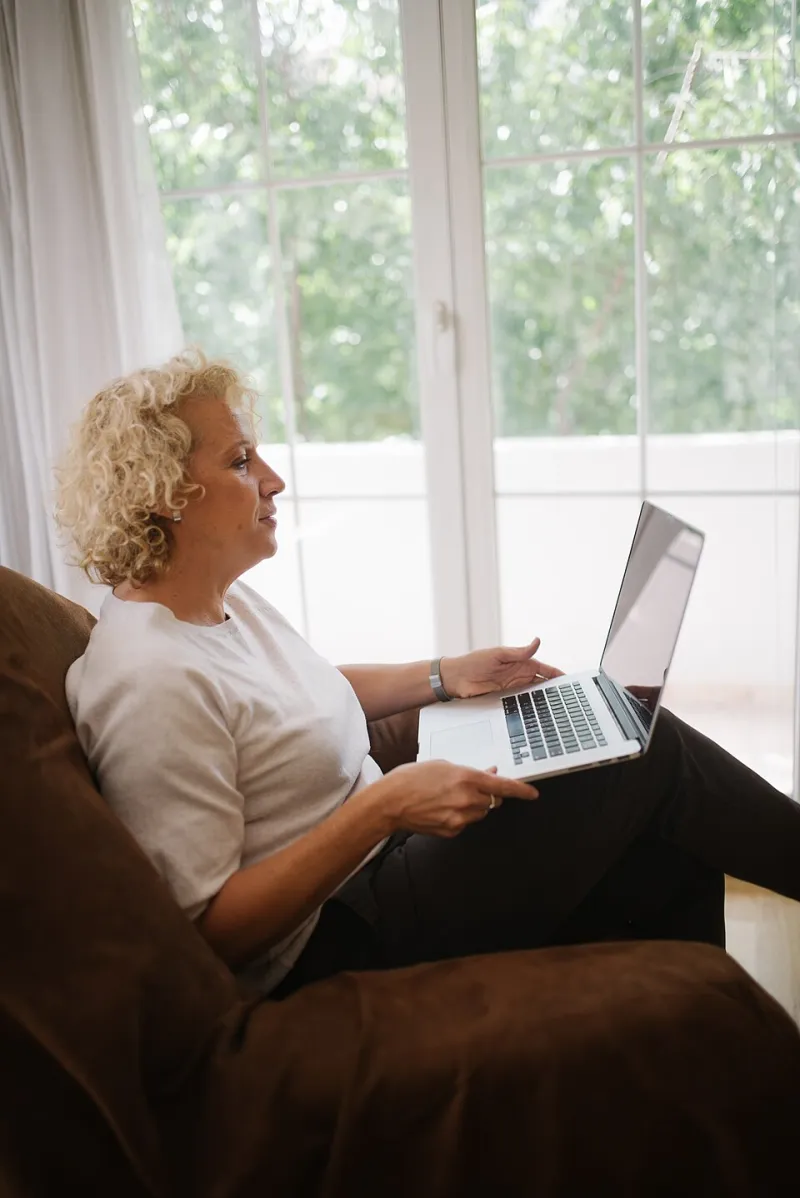
First, buy a small laptop. My thirteen-inch machine fit on the fold-down table; my colleague's gaming laptop required a variance from the local planning authority. Second, write into the same document every day and never reread yesterday's pages on the train — editing on the move is how drafts die. Third, carry a notebook for the days the table is broken, because it will be broken roughly every third Tuesday.
Fourth, and most important: pick a seat and claim it, privately, superstitiously. Not because it matters to the novel, but because ritual is the scaffolding of everything a writer pretends is talent.
The novel's done now. Draft two is happening at a kitchen table, in evenings, badly. I miss Seat 47. I saw the same dawn four hundred times through the same scratched window, and somewhere in that repetition, a book got written.
The 07:42 pulls in. I'm on it. Different book now, same seat, same faint smell of other people's coffee. Mind the doors.