Two Hundred Readers Who Actually Care: Confessions of a Recalibrated Writer
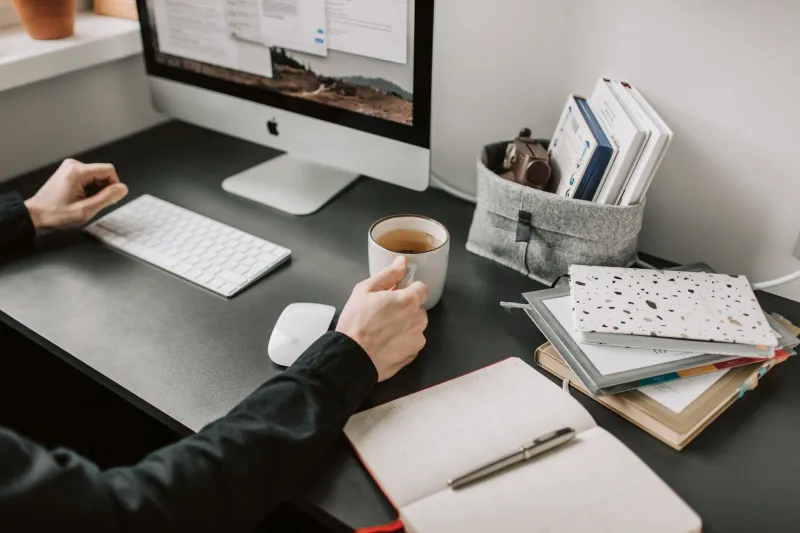
There's a moment I keep coming back to. It's a Tuesday evening in February, I'm sat on the sofa with a cup of tea going cold beside me, and I'm refreshing the stats page on my phone for the fourth time in an hour. Nothing has changed. Nothing was going to change. And yet there I was, checking again, like a man poking a fire that went out years ago.
That was me, roughly eighteen months ago. A writer with a website, a half-hearted Instagram, a Twitter account I'd had since university, and a gnawing sense that I was failing at some invisible job I'd never actually applied for.
The Numbers Game Nobody Asked Me to Play
Here's the thing about being a writer in Britain right now: at some point, without anyone announcing it, the job description changed. You used to be able to just write. Now you're expected to be a content machine — posting reels, dancing to trending audio (I'd rather chew foil), threading insights on X, building a "personal brand" as though I'm a breakfast cereal.
The pressure is everywhere. Agents want to know your platform. Publishers ask about your "engagement." Even well-meaning friends ask how the "YouTube thing" is going, which is generous, because I have never uploaded a video in my life.
For a while, I played along. I made TikToks about writing tips. I learned what a hook was. I captioned things with "POV: you're a writer in London" and watched the algorithm toss them into the void. Some did okay. One got 40,000 views. And do you know what that 40,000 views bought me? Roughly eleven newsletter sign-ups and a comment from someone selling crypto.
The Maths That Changed My Mind
Let me do some back-of-a-fag-packet arithmetic. My newsletter has somewhere north of 200 subscribers. They are not passive. They reply. They tell me when I've misspelled something. One reader in Glasgow once sent me a three-paragraph email disagreeing with a review I wrote, and it remains one of my favourite pieces of correspondence ever.
When I publish something, those 200 people actually read it. Compare that with 20,000 followers on any social platform, where — thanks to the algorithm's whims — maybe 400 people see your post, and perhaps 40 of them read past the first sentence.
The small audience isn't just viable. It's better. It's better for the writing, because you're writing to people, not past them. It's better for your sanity, because you're not performing for strangers who owe you nothing. And it's better for the work itself, because — and this took me far too long to learn — nothing kills a decent essay faster than writing it for an audience you're terrified of losing.
What I Gave Up, and What I Got Back
I won't pretend the recalibration was painless. I deleted the TikTok app on a rainy Saturday and felt genuine withdrawal for about a fortnight. There's a real grief in admitting you're not going to be the next big thing, even when you never wanted to be the next big thing in the first place.
But here's what came flooding back in: mornings without a posting schedule. Essays written because I had something to say, not because the content calendar demanded it. The rediscovery of my own voice, which turns out to sound less like a motivational speaker and more like someone thinking out loud in a Wetherspoons beer garden.
I also got back time. Proper time — the kind you need to read widely, walk aimlessly, and notice things. The raw material of good writing hasn't changed since Dr Johnson's day: it's still attention, plus sitting down.
A Modest Proposal for Modest Writers
I'm not saying growth is bad, or that everyone should torch their socials. If a big audience genuinely serves your work, brilliant. But if you're a writer who feels vaguely ashamed that your numbers are small, let me offer a reframe: small is a strategy, not a failure.
Two hundred readers who show up every time is a literary magazine. It's a salon. It's the kind of audience writers had for centuries before we started counting in impressions. Virginia Woolf had the Hogarth Press and a circle of friends; I have a Mailchimp account and a man in Sheffield who emails me about commas.
I know which one I'd rather write for.
The fire I kept poking that February evening? It's out now, and I've stopped checking. The writing, meanwhile, is quietly on fire in all the ways that matter.