Waverley at Half Four: The Year the Ambitious Train Finally Left Without My Excuses
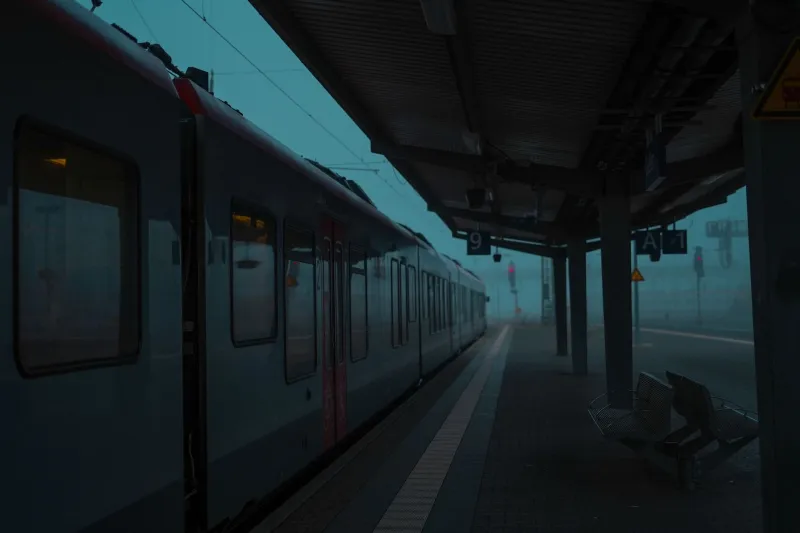
There is a specific kind of person who stands on a deserted platform at twenty past four in the morning, clutching a flask of coffee and a folder of notes nobody has asked for, and feels — briefly, absurdly — like the main character of their own life. I know this because I have been that person exactly once. Every other time, I have been the person reading about them.
A Decade of Hypothetical Tickets
For most of my twenties and a decent chunk of my thirties, I was a serial speculative journeyer. Not just to Edinburgh — though the Fringe was the recurring star of the fantasy — but everywhere. The epic novel set across three generations of a Yorkshire farming family. The stage adaptation of a novella that exactly eleven people had read. The one-man show about my grandfather's years on the buses, which I had outlined so thoroughly in my head that I sometimes felt I'd already performed it to sold-out houses in places I'd never visited.
The planning was the pleasure. There's a wordless comfort in a project that exists only as potential, because potential can't be rejected. My notebooks from that era are full of titles, chapter structures, festival deadlines circled in a pen that had clearly been gripping too hard. I never missed a deadline I hadn't set for myself, because I never met one either.
Friends would ask, reasonably, whether I was going to Edinburgh this year. And I'd say something like "probably, if the timing works out" — which is a sentence that means nothing and costs nothing and protects everything. The timing never worked out. The money was never quite there, or the show wasn't ready, or August collided with a cousin's wedding. The excuses were always genuine, which is the most insidious thing about them. Real excuses are far more effective than invented ones. You can't argue with a wedding.
The Writer I Was Going to Become
Here's what I was actually waiting for, though I couldn't have said it out loud: I was waiting to become the sort of person who did those things. The version of me who took the 4am train was, in my imagination, already published, already confident, already in possession of a coat that suggested he knew what he was doing. The real me — the one with the day job and the mild dread of unfamiliar cities — couldn't board that train, because the train belonged to someone else.
This is the gap I want to talk about, because I suspect it's familiar. The gap between the writer we imagine becoming and the one who actually sits down on a Tuesday evening with a lukewarm mug and 400 usable words. The imagined writer is a useful fiction up to a point — he gives you something to walk towards — but past that point he becomes a reason not to move. You can't start the epic novel because you're not the person who writes epic novels yet. And you never become that person, because you never start.
What Changed
Nothing dramatic changed. That's the disappointing truth. No breakthrough, no lucky break, no thunderclap of self-belief. What happened was smaller and stranger: a friend of mine was taking a show up, needed someone to help haul suitcases and hand out flyers, and asked if I fancied it. A job. A menial, unpaid-ish job. And because it wasn't my dream — because I was the roadie, not the headliner — I said yes without the usual internal committee convening.
I booked the 4:47 from my local station. I packed a bag the night before with the grim efficiency of someone who has rehearsed this trip in his head for a decade and knows exactly what goes in it. And at some point between York and the border, watching the sky go from black to a bruised grey over fields I couldn't name, I realised I'd been wrong about the whole thing.
The imagined version of me on that train had been serene. Purposeful. Arrived. The actual me was tired, slightly travel-sick, and carrying someone else's posters. And it was — genuinely — better. Because nobody on that train was finished. The woman opposite me was a lighting designer on her ninth Fringe and still nervous about it. The lads in the seat behind were taking up a show that had been written, rehearsed and printed in six weeks. Nobody had waited until they were ready. The ready people, I realised, mostly aren't up there.
Scaling the Dream Down Until It Fits Through the Door
I don't want to turn this into a motivational poster. But I did come home from that trip and change how I plan things, and the changes were practical, so here they are.
First: I stopped letting projects be big in private. The three-generation farming novel became a 20,000-word novella about one harvest. The stage adaptation became ten minutes of script I read aloud in my kitchen to see if it breathed. Shrink the ambition until it's small enough to actually do, then let it grow back if it wants to. Projects that survive contact with a small version of themselves deserve to get bigger.
Second: I booked things before I felt ready, on purpose, the way my friend had booked me. A deadline someone else is expecting you at — a reading, a workshop, a village hall slot — does more for a draft than any amount of internal resolve. You can cancel on yourself endlessly. Cancelling on other people requires a reason.
Third, and this is the one I'd tattoo on my forearm if I were the tattooing type: I stopped treating the journey as a reward for finishing. The 4am train isn't the prize at the end of becoming a writer. It's just a train. You're allowed on it now, tired and unfinished, holding a flask and someone else's posters. The version of you who boards it doesn't need to have arrived at anything.
The Return Ticket
I've been back to Edinburgh every August since. Sometimes with work, sometimes just to walk the Royal Mile and feel the specific, useful anxiety of watching other people do brave things in the rain. The epic novel is still there, waiting, and I've made peace with that — it may be a lifelong conversation rather than a destination.
But I no longer plan trips I don't take. If I catch myself circling dates in a notebook for a hypothetical August, I book the ticket that same evening. Cheapest fare, unsociable hour, no overthinking. The writer I imagined becoming turns out to have been just me, earlier, on a platform in the dark, deciding to get on.